
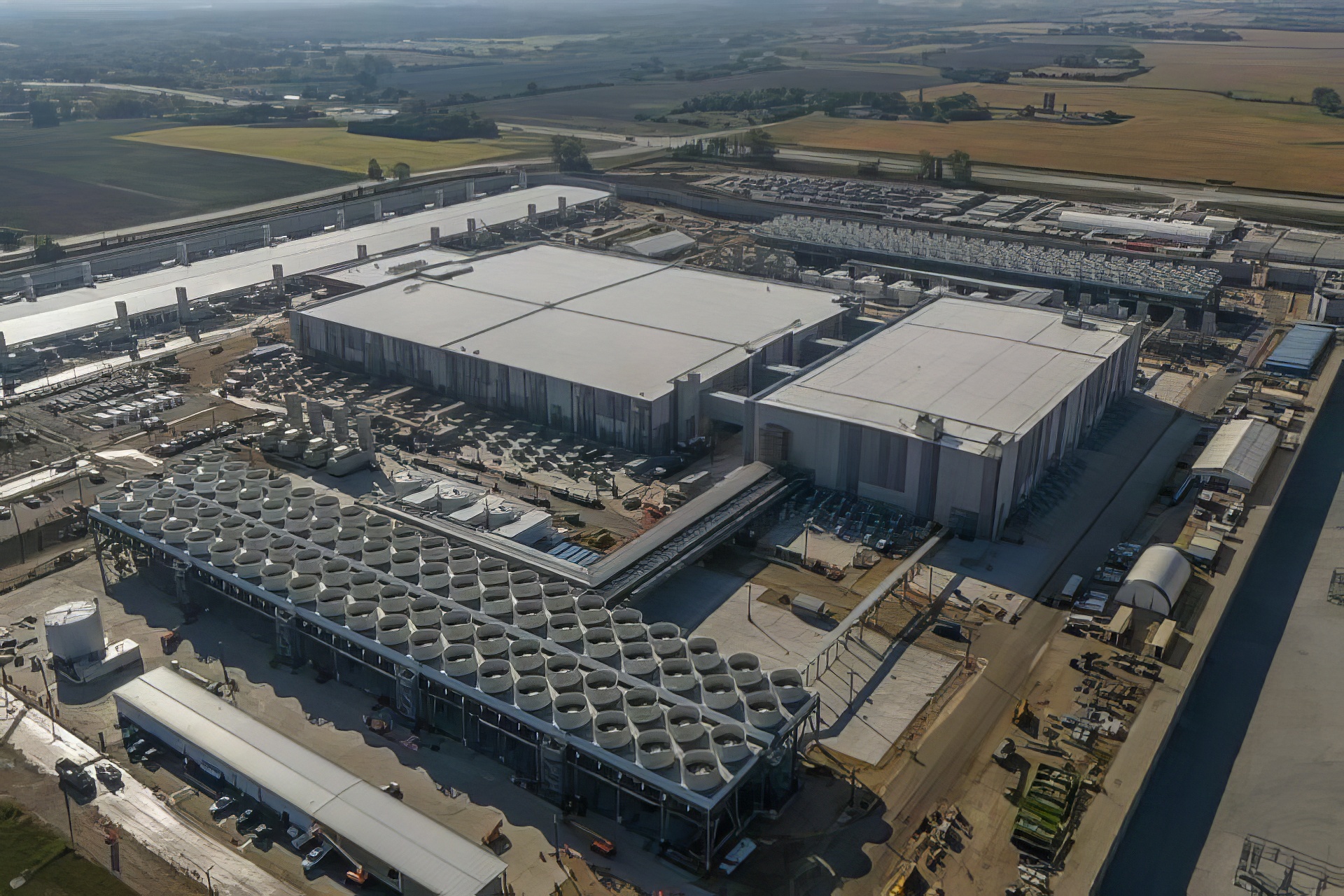
Microsoft is pitching its new Wisconsin complex as the benchmark for AI infrastructure. CEO Satya Nadella said the Fairwater campus in Mount Pleasant will be “the world’s largest datacenter,” claiming aggregate performance an order of magnitude beyond today’s biggest supercomputer. The build centers on “hundreds of thousands” of Nvidia GB200 accelerators and enough fiber to circle the globe 4.5 times (180,000 kilometers).
The location is symbolic. The same site was once promised as Foxconn’s U.S. manufacturing hub and was hailed in 2017 as an “eighth wonder of the world”; but the plan steadily shrank and ultimately delivered a tiny fraction of the pledged jobs. Microsoft acquired much of the land to construct a $3.3 billion AI campus and, after pausing expansion in January to reassess scope and technology shifts, is now doubling down with a second, roughly $4 billion facility.
Beyond raw compute, Microsoft emphasizes engineering scale. Over 90% of the footprint is designed around closed-loop liquid cooling, anchored by what the company describes as the world’s second-largest water-cooled chiller plant. Heated water is routed to building-length cooling fins where 172 twenty-foot fans push air across heat exchangers before recirculating the chilled water back into the loop.
Powering that much silicon is a challenge. Microsoft says it is building a 250-megawatt solar farm to match fossil-sourced consumption with renewables on a kilowatt-hour basis. Still, environmental groups warn the combined demand from Microsoft’s campus and another hyperscale facility in the region could exceed the electricity used by all Wisconsin homes, highlighting the tension between AI growth and grid sustainability.
Local impact will be substantial during construction. Microsoft estimates around 3,000 jobs, and roughly 800 permanent roles. The extensive fiber build-out to feed the campus may also boost broadband capacity for nearby communities.
Why this matters for you:
The services that power modern phone features: generative photo tools to voice assistants and copilot run on data centers like this. Bigger, faster datacenters can mean more swift AI experiences, more reliable photo/video AI upscales, and new cloud features that older phones can tap without hardware upgrades. On the flip side, expect continued demand surges for high-end GPUs and potential ripple effects on device pricing and cloud costs as the industry scales up.
Key Takeaways:
• Microsoft is converting the former Foxconn site into a flagship AI campus and adding a second massive facility.
• The design leans on closed-loop liquid cooling and huge fan walls to manage GPU heat at scale.
• A dedicated 250 MW solar project is planned, but environmental advocates remain concerned about overall grid load.
• Faster cloud AI may unlock new features on existing phones.
What’s Next:
As hyperscale AI campuses multiply, watch for three trends: (1) more cloud-delivered AI perks on phones without new silicon, (2) potential price movements in cloud-backed app features and storage, and (3) increased scrutiny on datacenter energy and water footprints. If Microsoft’s performance claims hold, expect rollouts of heavier on-device AI integrations that still lean on the cloud for the most compute-intensive tasks.
Leave a Reply